
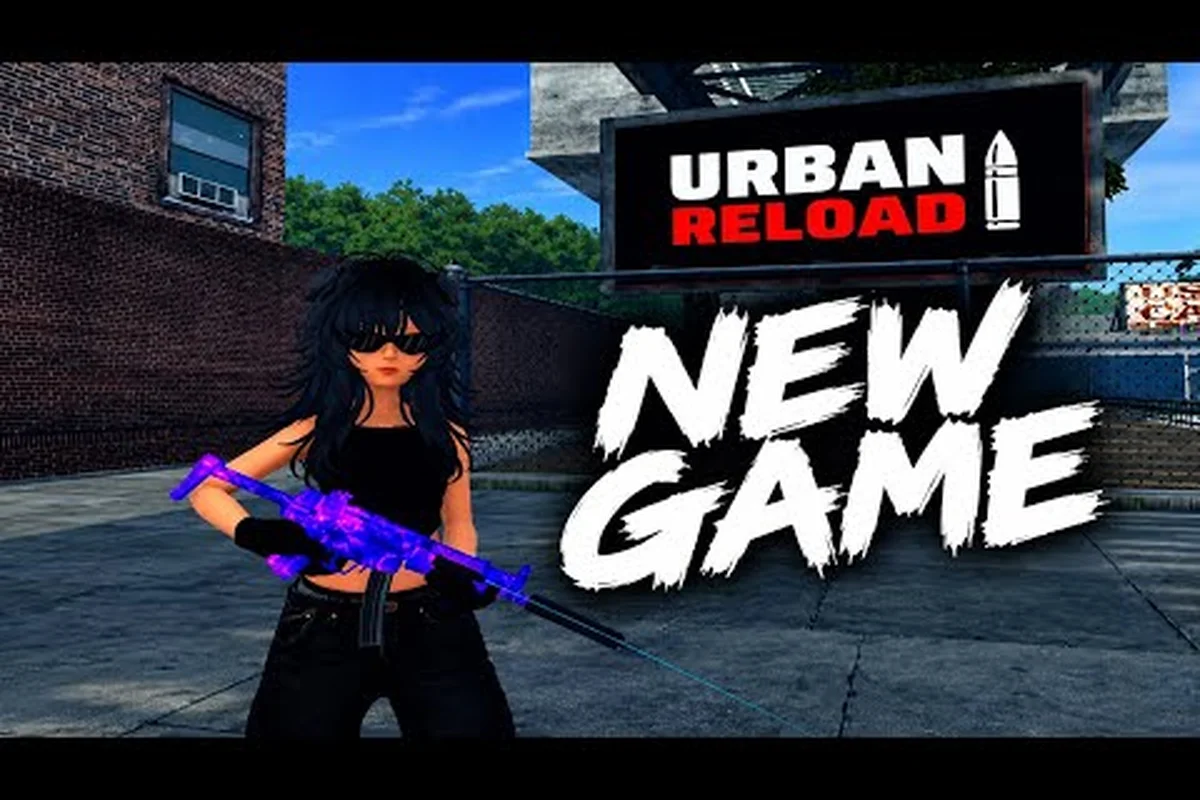
An urban reload daily guide should turn cash farming, loadout preparation, and gunfight execution into a repeatable loop rather than relying on random matchmaking. Start each session by checking your available cash, weapon upgrades, and preferred map, then use early low-risk rounds to build funds before committing to more demanding encounters. By tracking which routes, weapons, and engagement distances produce the strongest results, you can convert weak sessions into measurable progress and improve how you win urban reload matches.
Preparing Your Urban Reload Daily Routine
A strong urban reload daily guide begins before matchmaking because preparation determines how quickly you can enter combat and recover afterward. The official Urban Reload on Roblox page describes a tactical PvP game built around gunfights, looting enemy weapons, farming cash, unlocking guns and cosmetics, customizing cars, and forming crews. Those systems reward a clear order of operations rather than random movement.
The game page showed about 7,900 concurrent players, 11,505 favorites, and a 20-player server limit when checked on October 30, 2026. That snapshot does not predict match difficulty, but it does confirm that Urban Reload has a large active population. Expect varied opponents, lively servers, and enough competition that good preparation can materially affect your session.
A practical pre-match checklist
Before joining a server, complete a fast loadout-and-settings check: choose a usable primary weapon, confirm your backup option, and verify sensitivity, audio, and display scale. Then pick a clear objective—farming, combat practice, or cash gathering—and set a fixed match limit, because a focused session with a defined endpoint helps prevent unfocused matchmaking and decision fatigue.
| Preparation stage | Action | Reason it matters |
|---|---|---|
| Loadout | Select a usable primary weapon and keep a backup plan | A poor starting loadout can leave you without a strong option when combat begins |
| Settings | Confirm sensitivity, audio levels, and display scale | Consistent input and readable information make reactions more reliable |
| Objective | Choose farming, combat practice, or cash gathering | One clear purpose prevents unfocused matchmaking |
| Mental cue | Pick a focus such as crosshair placement or escape routes | A single cue is easier to apply than several competing goals |
| Session length | Set a fixed number of matches | Bounded sessions support better decisions and reduce fatigue |
The 20-player server cap makes every cover position more important because opponents can approach from several directions. Check nearby alleys, rooftops, windows, and street crossings before you commit to a route. This urban reload roadmap guide should be based on the actual loop: prepare, enter, collect, fight, recover, and evaluate.
If controls, inventory management, and weapon handling still feel unfamiliar, complete the Urban Reload beginner guide before testing advanced routes or close-range combat techniques. For example, spend an early session confirming movement, aiming, reload timing, and weapon-slot behavior without the pressure of cash gathering; mastering those fundamentals reduces menu delays, wasted ammunition, and poor loadout choices that can break a focused daily routine.
Building an Urban Reload Roadmap Guide
Progress in Urban Reload comes from several connected goals: earning cash, acquiring better guns, finding rare cosmetics, improving vehicles, and building a crew. An urban reload roadmap guide should convert those broad ambitions into short-term targets that remain realistic within a normal play session.
Three progress tracks worth tracking
| Track | Short-term target | Medium-term target | Best daily check |
|---|---|---|---|
| Economy | Accumulate a recoverable cash buffer | Unlock a dependable weapon upgrade | Track cash before and after each match |
| Combat | Improve first-shot accuracy | Secure more clean eliminations | Review close-range versus long-range results |
| Equipment | Test one new gun per session | Build a versatile two-weapon setup | Record recoil, handling, and reload speed |
Cash matters because losing a fight can drop your weapon, meaning the ability to recover and re-equip determines how long you can stay competitive. The weapon-drop recovery loop is central to this dynamic: after a death, get back into the fight, locate a usable gun, and avoid wasting the match while unarmed.
For additional progression context, compare the Urban Reload free-to-play guide with your own current goals. It can help separate low-cost improvements from purchases or longer-term unlocks, although exact rewards and prices may change with updates.
Set one daily milestone
A good milestone should be specific enough to finish and meaningful enough to improve tomorrow’s session. Examples include earning a set cash amount, testing two unfamiliar guns, winning three close-range engagements, or surviving an entire match without losing your primary weapon.
Avoid goals based only on kill totals. A kill count rewards speed and can encourage reckless pushes, while a goal such as landing the first clean elimination forces you to control range, timing, and positioning. The best objective combines cash gain, survival, and combat quality so that one bad fight does not erase an otherwise productive session.
Improving Combat With Urban Reload How to Win Tactics
Understanding urban reload how to win tactics begins with recognizing that position matters more than constant aggression. The environment provides cover, elevation, and routes through the city, so your route should create an advantage before a gunfight begins. Approach from an angle the opponent does not already face, and avoid crossing open space without a destination.
Compare fighting styles
| Style | Best use | Strength | Common mistake |
|---|---|---|---|
| Close-range pressure | Opponents caught in streets or buildings | Fast follow-up opportunities | Leaning into the opponent’s strongest sightline |
| Mid-range discipline | Roads, intersections, and long lanes | Time to react and correct aim | Standing still in a predictable position |
| High-ground control | Rooftops and elevated positions | Wider view and better firing angles | Exposing your body without a safe retreat |
| Rotating aggression | Farming and objective-focused play | Keeps matches from becoming static | Chasing eliminations across the entire map |
A reliable combat loop is spot, position, engage, confirm. First, identify where the opponent can appear. Second, secure a position that limits their options. Third, engage only when your weapon is ready and your aim is aligned. Fourth, confirm the result before moving into the next space.
Community gameplay such as eternal’s server-control run illustrates how coordinated movement and repeated contact can dominate a session. Treat that footage as player experience rather than an official strategy, because flashy eliminations may omit missed positioning or earlier losses.
Turn a lost duel into useful data
After death, review one specific mistake instead of blaming the result on lag, matchmaking, or the opponent. Did you sprint into an open lane, expose your weapon during reloading, fail to check a second entrance, or aim above the target?
| Mistake | Correction for the next match |
|---|---|
| Holding one angle too long | Move after a reasonable window or use another route |
| Fighting while reloading | Break line of sight before changing weapons |
| Chasing after a kill | Stabilize the position and collect nearby resources |
| Missing a reload cue | Track ammunition and the weapon’s ready state |
For deeper drills, use the Urban Reload PvP guide to focus on gunfight fundamentals rather than repeatedly chasing eliminations. A practical daily routine is to review one loss and one successful exchange after each session: in the loss, identify the exact decision that broke the gunfight; in the win, note what made the approach safe, such as breaking line of sight before a reload or checking the second entrance. Compare both rounds against the mistake table and choose one correction to apply in the next match.
Running an Effective Urban Reload Walkthrough Session
This urban reload walkthrough describes a complete session rather than a single match. The goal is to create a repeatable loop with clear start and finish points. A useful session might include two warm-up fights, two focused farming runs, and one final combat block, followed by a short review.
Session timeline
| Phase | Suggested length | Main objective | Success measure |
|---|---|---|---|
| Warm-up | 2 matches | Practice basic movement and aiming | Identify one early mistake |
| Farm | 2 matches | Gather cash and useful weapons | Leave with a stronger loadout |
| Focused fight | 2 matches | Apply one tactical cue | Improve engagement decisions |
| Review | 5 minutes | Record progress and next target | Choose one goal for the next session |
Start each warm-up match by moving deliberately through the first route you know. Once you understand the immediate surroundings, begin collecting resources instead of chasing distant opponents. This protects your economy, creates a controlled entry into combat, and prevents a poor opening from ruining the entire session.
During the farm phase, compare loot rather than equipping the first weapon you find. Consider handling, recoil, reload speed, and reliability. The official game page identifies weapon looting and gun unlocking as core progression systems, so a new pickup should earn its place through practical performance.
End with focused combat rather than continuing to farm indefinitely. Pick one cue—crosshair height, checking your second angle, or retreating to reload—and track whether you followed it. Focused improvement beats trying to change aiming, movement, equipment, and route all at once.
A short visual reference can also help. The Ultimate Guide video by MySpaceGuide offers a compact overview of tips and codes, while ItzVexo’s Urban Reload guide includes a longer look at earning money quickly. Treat both as community-created resources and verify current details against the official game page.
Adapting the Daily Guide to Your Schedule
The best routine fits the time you actually have. Five minutes and two hours call for different expectations, yet both can produce useful progress. The urban reload daily guide should reduce wasted effort rather than demand an exhausting schedule every day.
Match the routine to available time
| Available time | Recommended routine | Main target |
|---|---|---|
| 5–10 minutes | One match and one review | Check equipment and record one lesson |
| 20–30 minutes | Two matches plus focused farming | Improve cash and first-engagement timing |
| 45–60 minutes | Two warm-ups, two farms, two fights | Build a balanced session |
| 90 minutes or more | Full session with a mid-session break | Maintain decision quality and avoid fatigue |
Keep a lightweight performance log
Record only three items after each session: the cash result, the best tactical cue, and the next adjustment. For example, if a lost gun was not recovered after a firefight, note whether the cash gain still covered the replacement; if the cash economy looks healthy but combat performance declined, the issue may lie in route choice or overextending after kills. This keeps the Urban Reload daily guide focused on actionable patterns rather than long match-by-match commentary, while the fields below explain how to write each entry clearly.
| Field | Example entry | Why it helps |
|---|---|---|
| Cash result | Earned enough to replace a lost gun | Connects combat decisions to economy |
| Best tactical cue | Checked a second angle | Identifies a repeatable habit |
| Next adjustment | Avoid sprinting into open streets | Converts one lesson into tomorrow’s focus |
Logging should take less than five minutes. A long spreadsheet can become another task that distracts from the game, whereas three clear fields make patterns easier to spot. Over a week, this small performance log may reveal that late-session losses begin after repeated quick matches, or that close-range combat improves when you stop overextending after kills.
Community reports and gameplay videos can support this process, but they should not replace your own measurements. The official Squad Labs Roblox group is a better place to verify studio announcements, while the official Urban Reload Discord provides information about updates, crews, and matchmaking activity.
Common Mistakes in the Daily Routine
Most disappointing sessions happen because players optimize one visible number while ignoring the rest of the loop. The cash-first routine can neglect survival; the kill-first routine can drain resources; and the exploration routine can end before the player gains enough value from the map.
Common Mistakes to Review
| Mistake | Why it hurts | Better adjustment |
|---|---|---|
| Entering fights with an unreliable weapon | Losses compound when equipment and cash are both poor | Keep a dependable backup until upgrades are secure |
| Chasing every opponent | Travel wastes time and exposes you to repeated fights | Fight when the reward justifies the risk |
| Changing the entire routine daily | Progress becomes difficult to measure | Change one tactical cue per session |
| Playing without a session endpoint | Fatigue increases careless decisions | End after a fixed match count |
| Ignoring crews and communication | Team opportunities go unused | Check crew activity before solo matchmaking |
Another common error is copying a high-risk tactic from a community clip without accounting for your own skill level. A strategy that produces an impressive highlight may still involve an unfavorable exchange. Measure success by cash, survival, and repeatability—not by whether one moment looked exciting.
The final adjustment is to distinguish strategy from outcome. A correct rotation can still result in a loss, while a reckless elimination can end in a dangerous recovery. Keep the process visible so your urban reload roadmap guide evolves through evidence rather than emotional reaction.
Frequently Asked Questions
What should I do first in an Urban Reload session?
Begin with a short warm-up that checks your controls, weapon handling, and familiar routes. Choose a clear objective, such as gathering cash or practicing close-range engagements, because switching goals constantly makes improvement harder to measure. End with a brief review that records one thing to correct next time.
How many matches should I play each day?
The best number depends on your available time and decision quality. A focused 20-minute session with two matches can produce more improvement than a long session filled with repetitive queueing. For a structured urban reload daily guide, use two warm-ups, two farming matches, and two focused fights, then stop if fatigue affects your reactions.
Is farming more important than getting eliminations?
Farming supports your economy because a death can cost you your weapon, while eliminations can accelerate combat progress. Neither objective should dominate every match. Alternate between them, especially when your cash is low or your current weapon performs poorly, because a balanced routine creates more opportunities to recover from mistakes.
What is the best way to improve after losing a gunfight?
Review one concrete error, such as exposing your position, reloading in view, or failing to check another angle. Correct that single issue in the next engagement rather than changing everything at once. This focused cycle, supported by the Urban Reload complete guide, makes improvement easier to recognize across a full session.
Should I join a crew for daily matches?
A crew can add communication, shared objectives, and access to group activities, but solo play remains useful for focused practice. Check your available time and whether your current goal needs teamwork. If you enjoy organized play, the Urban Reload crew guide can help you evaluate recruitment, ranks, and available benefits.
A disciplined Urban Reload routine combines preparation, purposeful farming, focused combat, and quick review. By improving one decision at a time and using reliable measures such as cash, survival, and engagement quality, each session becomes a clearer step toward winning more matches.