
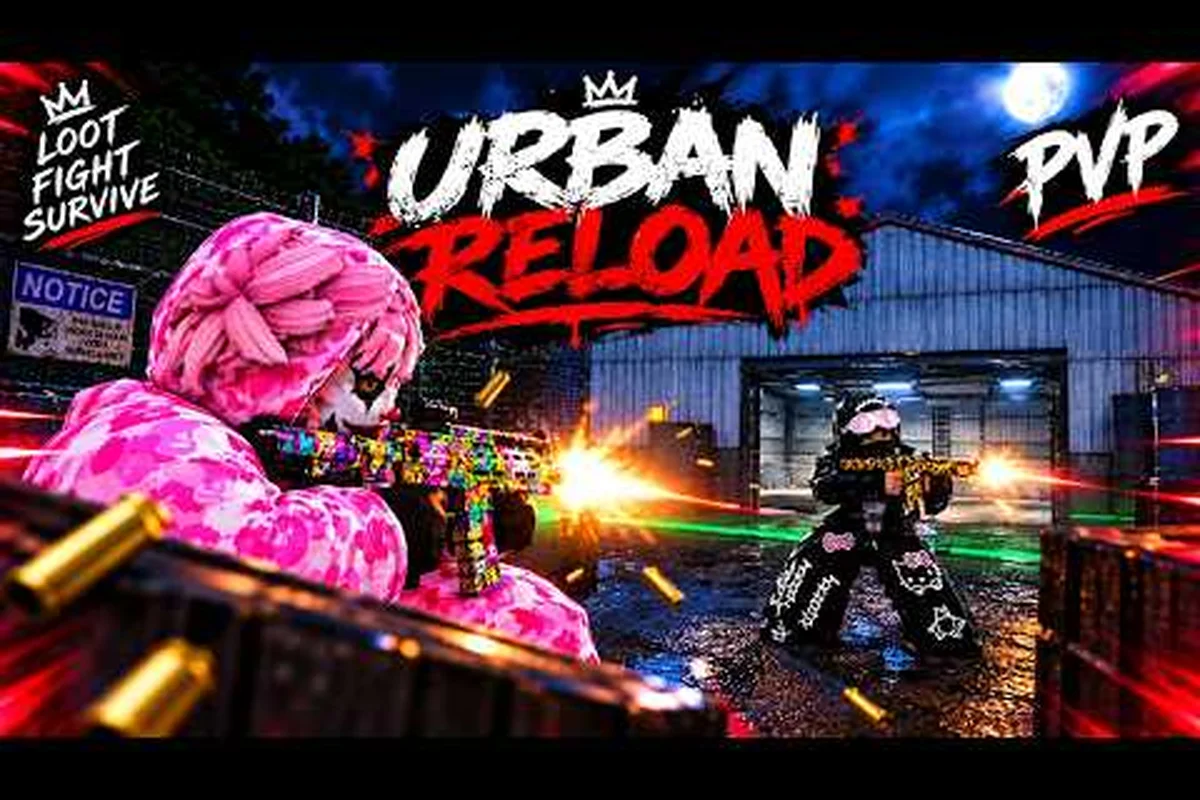
Urban Reload FFA rewards controlled positioning more than raw firepower because urban cover and narrow sightlines make every peek predictable. A strong opening angle lets you watch a doorway or lane before committing, while disciplined spacing stops opponents from surrounding your position. For example, when an enemy crosses an exposed lane, hold your fire until their movement reveals their path, then capitalize on the brief window before they reach cover. These timing fundamentals support a more reliable climb toward the global leaderboard.
Urban Reload FFA Guide: Read the Match Before You Fight
Urban Reload free for all matches become much easier to manage when every encounter begins with a decision: gain information, create distance, or commit to the fight. Chasing every opponent and firing at the first visible target may produce early eliminations, but it also exposes you to crossfire and wastes your strongest ammunition.
This urban reload ffa guide treats ranked play as a series of repeatable decisions rather than a collection of disconnected gunfights. The strongest competitors preserve enough resources to handle the next threat, which may appear while they are reloading or moving through a narrow route.
Start With Three Match Objectives
Before each match, choose three measurable priorities that fit your current skill level: one for resource management, one for map control, and one for opponent isolation. Track them with simple signals such as ammunition remaining at a zone rotation, the number of visible entrances, or whether a kill produces a safe elimination route. For example, if you consistently lose early gunfights with partial magazines, prioritize reload timing and loot value before optimizing positioning; if opponents keep flanking from the same sightline, prioritize route control instead. This creates a repeatable decision framework for your urban reload free for all matches and makes ranked climb progress easier to diagnose than changing loadouts after every defeat.
-
Survival first: finish above the average elimination rate before chasing higher placement.
-
Route control: identify the areas you can watch while keeping one escape route available.
-
Opponent isolation: prevent two enemies from discovering and surrounding you at the same time.
| Priority | What to watch | Success signal |
|---|---|---|
| Survival | Health and ammunition | You enter later fights with enough resources to finish |
| Positioning | Entrances and sightlines | Opponents reveal themselves before they can flank you |
| Fight selection | Nearby movement sounds | You choose fights with favorable odds |
| Recovery | Post-elimination route | You avoid the same danger zone twice in succession |
Fight selection deserves special attention. A fight with a better-equipped opponent can be worthwhile if you control the approach, whereas an evenly matched opponent in the open can be dangerous even when your weapon is stronger. The central skill in this urban reload ffa guide is making the fight happen on terms you can manage.
Starting Every FFA Match on the Same Spot
A consistent opening routine prevents panic from taking control. Move through one familiar route, listen for early movement, and save the first clear exchange for a short burst. If no opponent appears, keep moving instead of camping in one room, because stationary targets are easier to locate and predict.
Good early-round discipline produces information even when you do not land an elimination. The sound of footsteps, a visible doorway, or a briefly exposed enemy can reveal how the map is being used. That information lets you choose safer routes during the middle of the match and preserves your best weapons for favorable encounters.
Urban Reload Ranked Guide: Master Isolated Duels
Urban Reload ranked guide priorities begin with isolation because close-range combat is rarely decided by the first person who sees the target. It is often decided by the player who controls the approach, protects the reload window, and forces the opponent to reveal their movement.
Control Three Layers of Space
Treat every duel as three connected layers: the approach lane, the engagement area, and the escape route. If an opponent can control all three, you should relocate rather than force a fight. If you control the approach but lose the engagement area, use movement to reset instead of standing and trading shots.
| Situation | Better choice | Reason |
|---|---|---|
| Opponent watches one doorway | Move through a second approach | Their attention no longer covers your route |
| Ammunition is nearly empty | Break contact and reload | A forced finish creates an easy follow-up elimination |
| Crossfire is possible | Hold the off-angle | A visible enemy cannot shoot every lane at once |
| Enemy is faster in the open | Fight near cover | Cover reduces reaction time and limits exposure |
| You have full health and ammunition | Take the favorable contest | Your resources create room for controlled aggression |
Off-angle positioning is often more valuable than extra weapon upgrades. It changes where the opponent expects you to appear and makes their first shot less accurate. The best angle remains useful even if you do not immediately land a kill because it creates time to read their movement and decide whether to continue.
Punish Reloading Without Standing Still
Reloading creates a clear vulnerability, but rushing directly toward it often gives the opponent a free shot. Move diagonally across cover, vary your speed, and listen for the reload cue. Stop short of the exposed area if you can, because a stationary player becomes an easier target than one who keeps changing direction.
Reload pressure works best when it combines movement with a clear exit. Approach from one side, force the enemy to turn, and then reposition before firing the finishing sequence. If your opponent begins moving while reloading, preserve the advantage by tracking their route instead of exposing yourself to recover a lost angle.
Choose Between Quick Finishes and Clean Trades
A quick finish is any exchange in which your opponent cannot return effective fire. A clean trade may leave you low on health, but it can be better than taking a poor first fight to secure a risky second. Judge each exchange using resources, positioning, and the number of enemies still active.
| Exchange | Result | Decision |
|---|---|---|
| Opponent drops before aiming | Clean opening | Push for the finish |
| Both players lose most health | Costly trade | Break contact if more opponents remain |
| You win while staying on cover | Ideal finish | Search for the next threat quickly |
| You survive but must reload | Vulnerable window | Hold an angle rather than rushing |
| Another enemy arrives during the fight | Lost isolation | Rotate immediately |
A survivable loss can protect your placement. In free for all play, an early exit with intact resources may produce a better final standing than a double elimination caused by two opponents converging on one difficult engagement. This is why patient players often outperform more aggressive opponents over a full match.
Urban Reload Leaderboards Explained: Turn Small Wins Into Placement
Urban reload leaderboards explained properly means separating visible combat results from the rating process that ultimately ranks your performance. A high elimination count can look impressive, yet the placement system may reward eliminating dangerous opponents late in a match, avoiding repeated deaths, or converting opportunities into wins at decisive moments.
Because the available source material does not provide a verified current formula for ranking points, the safest approach is to focus on outcomes the interface displays. Track your placement, eliminations, and match history together, because this reveals whether your climb comes from strong combat, better timing, or frequent early exits.
Read the Leaderboard Signals
The global leaderboard is best treated as a diagnostic tool rather than a target you can chase directly. A single high-ranked player may rely on unusual weapons, excellent aim, or favorable match conditions. Your own recent matches provide a more reliable guide because they show whether the same habits produce results for your current loadout and skill level.
| Signal | What it may indicate | Action |
|---|---|---|
| Many eliminations, low placement | Strong fights are happening too early or in crowded areas | Improve fight selection and exit timing |
| Low eliminations, strong placement | Conservative timing is working | Target cleaner late-round opportunities |
| Strong start, weak finish | Early positioning is effective | Preserve ammunition and health for late fights |
| Weak start, strong finish | Late-round awareness is strong | Enter mid-match routes more safely |
| Inconsistent results | Loadout or route changes may be unstable | Test one change at a time |
Community reports often describe the highest ranks as a mix of mechanical skill and restraint, but no single community strategy replaces personal review. If you want to examine the available loadouts before tuning your approach, the Urban Reload weapons list can help you compare your current choices and look for a more practical all-around setup.
Maintain a Climbable Performance Loop
A sustainable loop has four stages: observe, select, fight, and review. During observation, note where opponents gather and which routes produce early contact. During selection, avoid fights that require you to cross open ground or defeat multiple enemies simultaneously. During the fight, preserve your reload window and exit plan. During review, compare the result with your intention.
One-game review is more actionable than a long emotional debrief. After every match, write down three facts: your placement, your elimination count, and the point where you lost your most important advantage. If those facts reveal the same problem across several matches, change one behavior in your next session.
For example, if you repeatedly lose fights while crossing the center, choose a side route and hold the first doorway available. If you perform well early but fall behind late, protect ammunition and avoid long rotations. If fights feel random, spend one match observing quieter routes before entering contested areas.
| Review period | Signal | Focused adjustment |
|---|---|---|
| One match | Unclear mistake | Record the decision that ended the match |
| Three matches | Repeated route problem | Avoid the route involved in most losses |
| Five matches | Similar fight errors | Change approach distance or target priority |
| Ten matches | No improvement | Review loadout, aim routine, and settings |
The one-variable test keeps progress measurable. Change only your opening route for three matches, then compare placements and elimination timing with your previous ten. Because every match still contains many uncontrollable events, a short controlled test is more reliable than switching tactics after every defeat.
Urban Reload How to Climb Leaderboard With Safer Decisions
Urban reload how to climb leaderboard results depend on repeatable improvement, not reckless aggression. High-ranked players still lose fights; what separates them is preserving enough health, ammunition, and map control to keep earning value after the opening minutes. Your climb plan should emphasize the decisions that produce those advantages.
Use a Three-Zone Match Plan
Divide the match into early, middle, and late phases. In the early phase, prioritize safe information and favorable one-on-one fights. In the middle phase, punish opponents who are moving without support. In the late phase, value your position over every unnecessary elimination.
| Match phase | Main goal | Avoid |
|---|---|---|
| Early | Build health, ammunition, and safe eliminations | Wandering into unknown crossfire |
| Middle | Target isolated opponents and rotate carefully | Chasing the same opponent through multiple rooms |
| Late | Preserve a strong position for final opponents | Trading sightlines for an extra elimination |
Late-match patience can create a large placement advantage. When only a few players remain, walking into the center because it is the biggest area may be worse than securing a smaller route with better information. You gain little from an extra elimination if that fight ends with you eliminated by the next arrival.
Build Better Risk Decisions
Risk decisions become clearer when you score opportunities before taking them. Consider whether you have cover, whether the opponent can escape, and whether another player can intervene. You do not need perfect information; you need enough evidence to avoid a clearly unfavorable engagement.
The risk score can be as simple as three questions: Is the opponent’s main threat visible, can you disengage without exposing yourself to a free shot, and can you win the exchange before ammunition becomes a problem? Treat a “no” as a repositioning signal, not an automatic retreat; for example, if cover is lost and the opponent has a clear angle, reset the fight instead of forcing a low-probability duel. This lightweight check helps Urban Reload FFA players conserve ammo, preserve health, and avoid trading an uncertain setup for an immediate elimination.
-
Can I see one main threat rather than two possible threats?
-
Can I disengage without giving the opponent a free shot?
-
Can I finish the exchange before my ammunition becomes a problem?
A “no” should trigger a positioning reset, not necessarily a full disengagement from the fight. For example, if your cover is broken but the opponent is reloading or has only one visible threat, strafe to a safer angle and force them to reveal their next move; if they maintain the advantage and your magazine is nearly empty, rotate instead of starting a low-ammo duel. In Urban Reload FFA, this preserves your health, keeps your weapon ready for the next engagement, and prevents one unfavorable exchange from ending your run.
Players who are still building their fundamentals can also review the Urban Reload beginner guide for core movement, weapon handling, and setup habits. Learning the basics before chasing a leaderboard climb can prevent costly mistakes that compound across several matches.
Protect the Climb With Recovery Rules
Set simple recovery rules for the moments after a difficult elimination. Do not immediately return to the death location, do not chase the same opponent through an entire building, and do not fire at long-range targets while a closer threat is moving nearby. These rules reduce the chance that one loss becomes two.
Resource thresholds make those rules measurable. Enter a new area only when your health and ammunition can support another exchange. If your ammunition is low, prioritize a route that gives you cover while you recover. When your health is poor, avoid long sightlines and look for an opponent whose movement reveals their position.
Review Ten Matches Instead of Chasing One Peak Score
A single exceptional match can distort your expectations. Reviewing a ten-match sample shows whether your placement is rising, whether eliminations occur at useful times, and whether you are dying before the match develops. Use this simple record after each session:
| Record field | What to enter | Why it matters |
|---|---|---|
| Placement | Your final rank in the match | Shows the outcome you are trying to improve |
| Eliminations | Confirmed opponents defeated | Measures combat contribution |
| Strongest fight window | Early, middle, or late | Reveals when your approach works |
| Main loss point | Route, aim, range, or crowding | Prevents vague improvement goals |
| Next-match adjustment | One behavior to test | Creates a controlled progression plan |
A ten-match review also keeps you from changing weapons after every bad result. Keep your loadout stable long enough to judge your decision-making, then adjust only when a consistent pattern suggests the equipment is limiting your results. If attachments or handling are confusing, the Urban Reload ads and speed guide covers the relevant customization choices more closely.
Urban Reload FFA Guide: Advanced Match Discipline
Advanced Urban Reload free for all play adds another layer: you must read not only your opponent but also the audience around that opponent. A player who is alone may become dangerous when another opponent approaches from a separate angle. Hearing or spotting that second threat changes the value of the entire fight.
Identify Threat Priority
Assign threat priority by weighing proximity, visibility, angle, and expected damage output rather than automatically targeting the nearest opponent. In an Urban Reload free-for-all, a visible player across the street may be less dangerous than a partly concealed opponent beside a doorway or window with a clear line of fire. If that hidden player is already tracking your reload animation, break sight, pre-aim the likely exit, and avoid standing in the open; otherwise, the closer visible target may offer the safer, faster finish.
| Threat state | Priority | Preferred response |
|---|---|---|
| Visible, close, aiming at you | Highest | Break sight or finish quickly |
| Hidden, but movement is audible | High | Pre-aim the likely entrance |
| Visible at long range | Medium | Hold cover while checking closer angles |
| Unknown but confirmed nearby | Medium | Reposition before committing |
| Already eliminated | Lowest | Confirm without overextending |
Threat priority prevents target fixation, one of the easiest mistakes to develop. When you focus entirely on the opponent in front of you, a third player can become the real decision-maker. Before committing to a duel, check doors, windows, rooftops, and other lanes that could contain support.
Use Audio as a Map-Filtering Tool
Sound can narrow your options when vision is limited. Listen for the direction and depth of movement rather than reacting to every sound instantly. Footsteps in a nearby corridor deserve a faster response than distant movement across an open area, while reload cues signal a possible opening nearby.
Community experience suggests that players who consciously listen often rotate earlier because they understand which routes are occupied. Treat sound as evidence, though, not certainty. A deceptive sound or audio overlap can lead you toward danger, so cross-check it with movement and visible openings before changing your entire plan.
Learn When to Disengage
Disengaging is not the same as losing. If you have broken contact and your opponent has spent ammunition or moved into a worse position, your reset window may be more valuable than continuing the original exchange. Move, reload, and then approach from a different angle if necessary.
| Reason to leave | Smart reset |
|---|---|
| Reload needed | Move behind cover and change direction |
| Another opponent appears | Rotate before the second threat arrives |
| Enemy has better angle | Create a parallel route |
| Low health | Search for a safer opponent or hold position |
| Unclear enemy count | Pause near cover and gather information |
This approach prevents the common mistake of treating every visible opponent as a mandatory commitment. Your objective is the best available result at the current moment, which may mean winning the fight, preserving your health, or waiting for a cleaner opportunity.
Urban Reload FFA Guide: Build Your Complete Match Routine
A complete Urban Reload ffa guide needs preparation, execution, and review. Preparation determines whether your controls and settings support rapid decisions, while execution turns those decisions into consistent positioning. Review then separates skill problems from equipment problems so you do not change the wrong variable.
Prepare Before Queuing
Spend a few minutes before the queue with your preferred weapon and basic movement route. Confirm that your aiming, sensitivity, graphics, and audio settings are comfortable. This is also a good time to revisit the Urban Reload free to play guide for ways to strengthen your general progression without assuming that time played equals ranked readiness.
Prepare two weapon options rather than relying on one choice. One should suit your preferred range, and the other should give you a different response when your first option performs poorly. The important point is not to change constantly but to understand why you select each loadout.
Execute One Simple Rule Per Match
Choose one match rule before you enter. Examples include avoiding the center during the opening minute, securing one early elimination without dying, or preserving full ammunition until the middle phase. A single rule is easier to track than five vague goals and still creates measurable progress.
| Match rule | What it teaches you | Success measure |
|---|---|---|
| Open with a side route | Route discipline | Fewer early ambushes |
| Secure one controlled elimination | Fight selection | Better first engagement |
| Preserve ammunition | Resource discipline | More late-round options |
| Avoid contested center | Positioning | Safer middle phase |
| Finish with an active route | Exit awareness | Less passive ending |
Review and Adjust One Variable
At the end of the session, review your ten-match record. Identify the most frequent preventable mistake and adjust only that element. If the issue is crossfire, change routes; if it is long-range accuracy, change your engagement distance; if it is poor weapon handling, study the weapon reference before changing equipment again.
The climb cycle is straightforward: choose one target, collect several matches, identify the dominant error, test one adjustment, and repeat. This method improves the parts of ranked play you can control without pretending that every defeat comes from your opponent's skill.
Frequently Asked Questions
How do I improve in Urban Reload free for all matches?
Improve by making better early routes, selecting isolated opponents, and protecting your ammunition during reloads. Track placement and the stage of each fight across ten matches, then fix your most common error. Consistent positioning usually creates more value than repeatedly forcing crowded encounters.
What is the best way to climb the Urban Reload global leaderboard?
Climb the Urban Reload global leaderboard by improving placement, not merely chasing eliminations. Review whether your eliminations help you survive the middle and late stages, because strong starts followed by repeated deaths can damage your climb even when your kill count looks healthy.
How should I read Urban Reload leaderboards explained by the game interface?
Focus on the results you can verify in your own match history: placement, eliminations, and the point where fights turn. Because the available source material does not confirm the current ranking formula, avoid assuming that one visible statistic controls every rating change. Compare recent sessions and look for repeatable patterns.
Is ranked Urban Reload harder than standard free for all?
Ranked matches may place greater emphasis on consistent performance, although the precise matchmaking rules may vary by platform or update. Treat ranked play as a cleaner test of decision-making: avoid crowded fights, protect your resources, and judge the match by placement instead of one early elimination.
What should I change after losing several Urban Reload FFA matches?
Change one measurable behavior after reviewing several losses, such as your opening route, target selection, or reload timing. Switching weapons for every defeat makes it difficult to identify the cause. Keep the adjustment for several matches so that you can judge whether it improves placement and survival.