
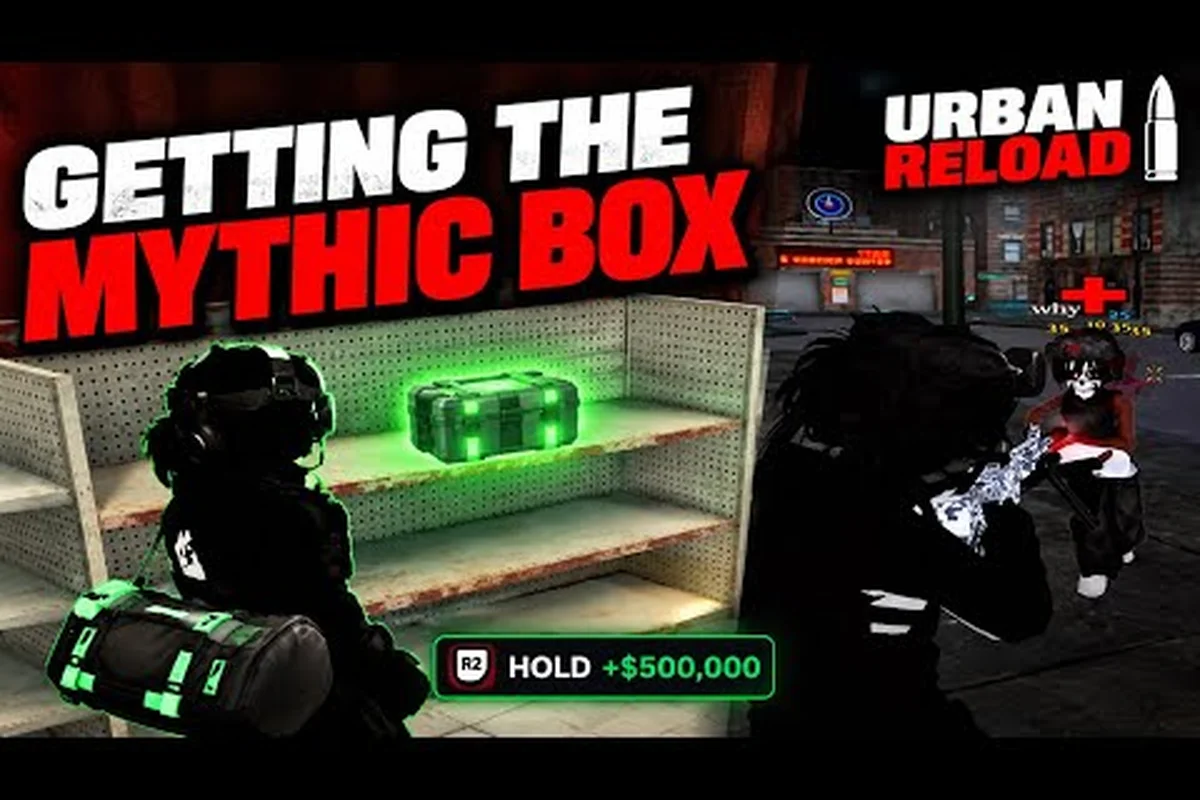
Urban Reload crew members can turn scattered objectives into a coordinated plan, but only when you understand the crew points, crew level, and progression benefits behind the system. Learn what each part contributes and when joining a team is better than playing alone.
Who Counts as an Urban Reload Crew Member
Urban Reload crew members are teammates who contribute to shared objectives while giving you more options for combat, farming, and crew progression. The key distinction is that a crew is not simply a larger lobby: its value comes from combined activity, clearer role coverage, and bonuses that become more useful as the group develops.
The most important terms are crew points, crew level, and crew progression. Crew points measure a crew’s collective contribution, while the crew level acts as a progress marker. Benefits tied to that level can improve the crew’s practical performance, depending on the current game version and available activities.
What Each Core Term Means
| Term | What it represents | Why it matters | Best time to focus on it |
|---|---|---|---|
| Crew points | Collective progress earned by crew activity | Shows how active the group has been | After completing shared tasks |
| Crew level | A milestone based on crew progress | Unlocks or reflects additional benefits | During steady group sessions |
| Crew progression | The path from one level toward the next | Helps estimate what the crew can gain | When planning long-term sessions |
| Crew benefits | Advantages associated with crew status or level | Improves the value of group activity | Before entering objectives |
Because the supplied game materials do not provide a verified formula for points, level thresholds, or exact reward amounts, you should treat any specific number as version-dependent until it appears in the game interface. This guide focuses on the reliable decision framework: how contribution, coordination, and level-driven benefits work together.
What a Crew Changes in Practice
A capable group gives you three practical advantages. First, teammates can split objectives so that one player handles the immediate fight while another protects a vulnerable objective. Second, shared progress reduces the feeling that individual farming has stalled. Third, a developed crew provides more opportunities to test roles and measure which contributions actually improve results.
The Urban Reload free-to-play guide is useful for improving the core skills that make teamwork productive. Movement, target selection, and map awareness matter more than crew size because a coordinated pair can outperform a noisy group of five.
Crew Points and Crew Level Explained
Crew points represent activity rather than a guaranteed victory or a fixed amount of personal cash. Their practical purpose is to help the crew move toward a higher level, while the exact earning rate depends on the activity completed and the current game rules. A clean comparison keeps these systems from being confused with individual experience.
| System | Scope | Main input | Typical output | Common misconception |
|---|---|---|---|---|
| Crew points | Shared crew total | Completed crew activities | Progress toward a crew milestone | Every point directly pays cash |
| Crew level | Shared crew status | Accumulated crew progress | Access to or eligibility for benefits | Every member receives the same personal upgrade |
| Personal progression | Individual player | The player’s own actions | Player-specific advancement | A crew level erases personal development |
Reading Crew Progress Correctly
When checking urban reload crew points, look for the actual event that generated them. A clean objective completed by several members may contribute more than repeated partial attempts, but that relationship must be confirmed in the current interface rather than assumed. Community reports can help identify patterns, yet they should be treated as observations rather than official formulas.
The crew progress bar is best used as a planning tool. If it moves steadily after missions, keep the group focused on repeatable activities. If it does not move, switch objectives or inspect crew settings. Useful troubleshooting steps appear in the crew activity and role assignment overview, which also explains why a change in team structure can affect efficiency.
Turning Points Into Meaningful Progress
Treat each urban reload crew mission as a controlled test: note the crew points, run one repeatable activity, then compare the resulting urban reload crew level with the starting total. If a mission unlocks a reward at a specific level threshold, prioritize it over low-value farming; for example, a crew can stop a mediocre run once its points are enough to activate a needed urban reload crew benefit. This makes crew progression measurable rather than assuming that urban reload solo play is as efficient as coordinated crew play.
-
Record the starting total. Check the crew points before beginning a repeatable objective.
-
Choose one repeatable activity. Keep the task consistent so any change is easier to interpret.
-
Check the crew level afterward. Compare both values and note which activity generated progress.
-
Delay lower-value objectives. If a mission offers little apparent progress, use it only when it supports another needed reward.
This method prevents busy playtime from being mistaken for urban reload crew progression: the crew points total and urban reload crew level provide the useful comparison. If the crew level remains unchanged after a repeatable objective, the crew can rotate activities instead of continuing the same task; if it rises, the group can repeat that activity or return later for another run. For example, when the next urban reload crew benefit requires a specific threshold, reaching that threshold can justify stopping the current mission, while a lower-value run may still be useful if it unlocks a prerequisite reward.
Urban Reload Crew Benefits by Progression Stage
Urban reload crew benefits generally become more valuable as shared progression improves. Because exact thresholds are not confirmed in the available sources, the safest approach is to compare the crew’s current status with the displayed benefits. Avoid relying on old videos or screenshots that may show a different version.
| Progression stage | What to expect | Main crew benefit | Practical recommendation |
|---|---|---|---|
| New crew | Basic shared identity and coordination | Easier assignment of immediate tasks | Test roles before optimizing points |
| Developing crew | More visible accumulation | Better support for repeatable objectives | Compare activity point values |
| Established crew | Higher crew level or clearer milestone status | Access to stronger shared advantages | Focus on objectives that reliably move the meter |
| Mature crew | Advanced progression state | Greater efficiency from established routines | Preserve stability and rotate responsibilities |
Early-Stage Crew Benefits
Early progression is about learning the system, not chasing a perfect bonus. A small crew can establish communication habits, identify reliable objectives, and divide roles more efficiently than a larger group that has never coordinated. The main advantage at this stage is role clarity: everyone should know what to protect, attack, collect, or complete.
Urban reload crew progression also benefits from consistency because the group can compare sessions without changing its setup every time. Keep the same core players, use comparable objectives, and record whether the crew level advances. This creates a reliable baseline before adding more members.
Mid-Stage Crew Benefits
Once the crew gains consistent activity, the focus shifts to efficiency. Players should identify which tasks provide useful progress and which merely consume time. The shop and earning guide can help connect crew farming sessions with practical upgrades, allowing group activity to support both team progress and individual rewards.
At this stage, shared momentum becomes more important than raw member count. A crew that finishes one objective together and moves immediately into the next can outperform a larger team that spends time reorganizing. Use the crew points display to confirm that the chosen route is working, then focus on the next milestone.
Late-Stage Crew Benefits
At a mature level, benefits should be evaluated by their effect on each session. A small time savings is more valuable when repeated across many objectives, while a bonus that does not fit the current activity may be less useful than its description suggests. Compare the crew level with available missions and select benefits that support the group’s main routine.
A high urban reload crew level does not make objectives effortless: enemy difficulty, member skill, role balance, and communication still shape each urban reload crew mission. Crew progression provides better crew points and stronger foundational bonuses, but those gains only translate into results when the crew is assigned sensibly. For example, when solo play would require repeated reloads and limited coverage, a balanced urban reload crew can spread those tasks across members, yet a mismatched loadout can reduce the benefit. Crew level should therefore support tactical decisions rather than replace them.
Urban Reload Solo vs Crew: Which Approach Fits?
The urban reload solo vs crew decision should come down to your goal, available time, and whether the activity rewards cooperation. Playing alone offers control and flexibility; joining a crew offers coordination, shared progression, and access to group-focused benefits.
| Factor | Solo play | Crew play | Better choice |
|---|---|---|---|
| Schedule control | Maximum control over when to play | Must coordinate with members | Solo for short, irregular sessions |
| Learning new roles | Limited to your own play style | Can test support and damage roles | Crew for role experimentation |
| Crew points | No contribution to a crew | Can advance shared points | Crew for progression |
| Crew level | Does not affect crew status | May unlock or reflect benefits | Crew for milestone goals |
| Resource routing | Direct control over personal farming | Split objectives for shared efficiency | Depends on the reward target |
| Communication | No coordination overhead | Requires calls and task assignment | Solo when communication is difficult |
When Solo Play Is the Better Choice
Solo play is often best when your available time is short, the current objective is designed for independent play, or you want precise control over which enemies you engage. It also reduces coordination delays when members have different schedules or priorities. The solo farming and progression tips can help you maximize sessions without depending on a group being available.
A solo session still benefits from good fundamentals. Map knowledge, movement control, and reliable target priorities determine whether you finish objectives quickly enough to keep earning rewards. Crews magnify strong habits, but they cannot compensate for a player who has not learned the core loop.
When a Crew Offers a Clear Advantage
A crew becomes more useful when you need shared progress, want to divide objectives, or are trying to unlock group benefits. The best time to join is also when members can commit to a clear plan. “Play for a while” produces less value than “complete the first objective, collect, then rotate roles for the next.”
Before accepting an invite, check the crew’s communication and participation habits rather than relying on the member count. A strong crew member posts useful progress updates, responds to role requests, and can complete assigned objectives without delaying the group. For example, ask which member handles vehicle upgrades, weapon farming, or battle objectives before committing to a session; a crew with clear specialties makes it easier to earn urban reload crew points and maintain steady urban reload crew progression than a larger but inactive group.
-
Shared objective: Everyone knows what must be completed.
-
Role limit: No two members are assigned to the same critical task unless intentional.
-
Progress check: The group confirms which activity advances crew points.
-
Duration: The session has a natural stopping point.
-
Reward focus: The crew understands whether the goal is leveling, farming, or completing a battle.
The crew rewards and battles overview adds context for comparing objectives and planning sessions around the result players want. For urban reload crew members, this means checking which activities award urban reload crew points, whether those activities support urban reload crew progression, and how battle objectives compare with faster farming routes. A crew that targets one result can assign roles around vehicle upgrades, weapon farming, or battle completion, making the urban reload crew level and benefits easier to track than switching goals after every session.
Practical Crew Progression Plan
A reliable urban reload crew progression plan separates member coordination from milestone tracking, so the visible urban reload crew level reflects coordinated work rather than simply a group status. For example, after each shift, the crew can review urban reload crew points gained, assign one member to verify rewards and another to plan the next rotation, then compare solo play with crew play to identify where teamwork actually improved progress. This prevents disorganization while giving each urban reload crew member a clear contribution toward the next urban reload crew benefits tier.
Before the Session Starts
Choose one primary objective, one fallback objective, and the expected session length. Confirm that everyone can see the same crew interface and can identify the crew level before starting. If the group expects to farm resources, set a shopping goal; if it expects to progress, select activities that visibly move the shared meter.
| Preparation step | Decision | Reason it prevents problems |
|---|---|---|
| Session objective | Pick one main goal | Prevents fragmented progress |
| Role assignment | Give each member one priority | Reduces duplicate work |
| Point baseline | Record current crew points | Makes earnings measurable |
| Fallback task | Choose one backup activity | Handles blocked or crowded objectives |
| Exit condition | Set a time or completion target | Prevents fatigue and idle time |
During Active Play
Keep communication focused on changing information. Call out objective progress, role changes, and immediate threats rather than repeating constant instructions. Use the crew points check after the first completed task, because early confirmation reveals whether the selected route is worthwhile.
If progress is weak, change one variable at a time. Try a different task, revise the role split, or reduce the group to active participants. If progress is strong, continue until the next milestone or reward condition is reached. This disciplined comparison helps players distinguish team effort from individual performance.
After the Session Ends
Record four items: starting crew points, ending crew points, crew level before and after, and the most efficient activity. Comparing records across several sessions reveals patterns that a single run cannot. If the same activity repeatedly produces the best result, make it the foundation of the crew’s weekly routine.
When communication becomes the main problem, review the crew chat and settings guide. Clear messages and sensible settings reduce confusion, which is essential because a large roster without coordination can progress more slowly than a compact team with defined duties.
Maximizing Crew Benefits Without Oversizing the Team
More members do not automatically create more crew benefits. The strongest groups are often the ones that can maintain a simple objective loop, assign unambiguous roles, and check progress without unnecessary delays. Crew size should reflect the activity’s demands rather than an arbitrary limit.
Match the Team to the Task
For a straightforward farming route, a smaller crew may move faster because fewer people need instructions and fewer enemies distract the objective. For a battle or group-focused mission, additional members may provide useful coverage, provided roles remain balanced. The best team is the smallest one that can complete the objective consistently.
| Team approach | Best for | Main strength | Main risk |
|---|---|---|---|
| Solo | Flexible personal objectives | Complete control | No shared crew progress |
| Small crew | Repeatable farming and missions | Fast decisions | Limited role coverage |
| Balanced crew | Battles and complex objectives | Multiple roles | Coordination overhead |
| Large crew | Events designed for groups | Potential coverage | Duplicate work and confusion |
Protect the Progression Loop
Urban reload crew points are best accumulated through deliberate activity rather than constant switching. Choose missions that support the current goal, avoid unnecessary objectives, and rotate roles only when the previous assignment is complete. This protects crew momentum, reduces wasted travel, and makes each session easier to measure.
The key takeaway is straightforward: urban reload crew progression comes from coordinated contribution, not member count. A small crew of urban reload crew members can advance the urban reload crew level faster when every member completes one clearly assigned objective before taking the next; for example, two members handling deliveries while another covers the route can produce more steady urban reload crew points than five members duplicating the same task. The advantage comes from reducing idle time and preserving a clean handoff between crew roles.
Frequently Asked Questions
What are Urban Reload crew members used for?
Urban Reload crew members cooperate on shared objectives, contribute to crew points, and help unlock or access crew benefits. Their practical value includes dividing objectives, covering different roles, and improving progression when the team communicates clearly and stays focused on the same task.
How do crew points affect the crew level?
Crew points provide the activity-based progress used to advance the crew toward a new level. The exact earning rate and level thresholds can vary by activity and game version, so check the current crew interface for authoritative values rather than relying on outdated community formulas.
Does joining a crew replace solo progression in Urban Reload?
No. A crew supports shared progression, but individual rewards and personal advancement still depend on what you complete. Some activities and farming routes are efficient solo, while battles and group objectives often benefit from teammates who can protect, attack, and collect together.
Is a larger Urban Reload crew always better?
No. A larger group can provide broader role coverage, but communication delays and duplicated tasks may slow progress. A small, balanced crew often performs better when each member has a clear responsibility and the group can complete objectives without waiting for additional directions.
What is the best way to plan Urban Reload crew progression?
Record the current crew points and level, choose one repeatable activity with a defined purpose, and compare both values afterward. Keep the same core team when possible, test one change at a time, and use the results to identify the most productive activity for the crew’s goals.