
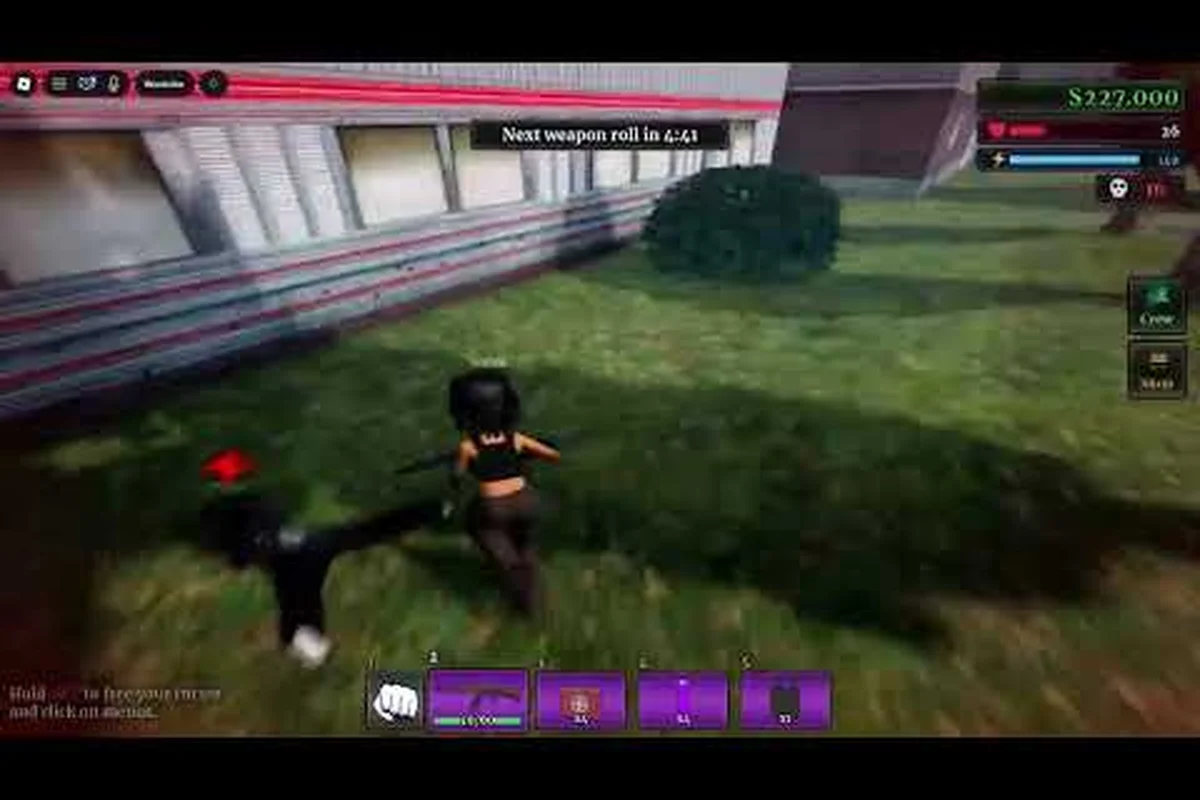
Urban Reload peak players reflect growing interest, but server size alone cannot reveal whether the game is worth playing. Its GTA-like missions matter because they add traversal, vehicle interactions, and open-world objectives beyond the shooting loop, while community videos and competitive play reveal how squads coordinate in practice. Checking Urban Reload’s Squad Labs groups can add another useful signal: active teammates and organized matches often indicate stronger community demand than raw player counts, especially for players deciding whether Urban Reload is similar to GTA and worth the time.
What Urban Reload Peak Players Say About Demand
The question of Urban Reload peak players matters because player concentration reflects launch interest, server activity, and the strength of the surrounding community. However, raw concurrency is only one signal. A game can attract a large temporary crowd during a beta and still have limited long-term depth, or it can begin with modest attendance and retain a dedicated core.
Available evidence offers a directional rather than a complete picture. Two recently validated community videos show both a 1:51 beta reaction from creator ven and a 12:11 competitive gameplay video from IGoBySkoob. The first suggests that the beta can spark curiosity among Roblox players, while the second shows that competitive players are willing to produce longer-form content. Neither video establishes an official concurrent-player record, so they should not be presented as proof of a specific peak.
| Community Signal | Available Evidence | What It Suggests | What It Does Not Prove |
|---|---|---|---|
| Beta reaction | 1:51 video by ven | The game attracts immediate interest | A sustained launch audience |
| Competitive showcase | 12:11 video by IGoBySkoob | Skilled play has visible appeal | The total server population |
| Official history | No verified figure supplied | Public data remains limited | A definitive peak-player number |
| Community activity | Videos discuss play and competition | A recognizable niche is forming | Mass-market adoption |
This evidence supports a clear conclusion: visible demand exists, but a reliable numerical peak cannot be claimed from these materials alone. Anyone evaluating the community should separate observable activity from estimates and avoid presenting a guessed concurrent count as a measured statistic.
Why Peak-Player Data Needs Context
Concurrent-player figures are most useful when they include a date, platform, and source. Without those details, a screenshot or unsourced claim can easily be outdated. A busy hour may also differ substantially from an average session, and Roblox servers can distribute players across experiences rather than concentrating everyone in one place.
The most responsible comparison includes four factors: measurement, scope, duration, and source. For Urban Reload peak players, a dated Roblox concurrent-player count should be separated from the game’s daily active audience, while claims about one busy hour should not be presented as a sustained peak. Comparing a week-long Roblox platform counter with an isolated social-media screenshot helps prevent inflated impressions of Urban Reload’s reach across Squad Labs’ experiences.
| Comparison Factor | Stronger Evidence | Weaker Evidence |
|---|---|---|
| Measurement | Dated chart or platform counter | Undated screenshot |
| Scope | Concurrent and peak figures | “Lots of players” |
| Duration | One week or longer | A single busy hour |
| Source | Roblox or verified analytics | Anonymous social-media claim |
For readers who also want to understand how the game presents itself, the Urban Reload developer and group overview provides useful background on its community footprint and development identity. It should complement, not replace, measured player-count evidence.
Urban Reload Like GTA: Why the Comparison Keeps Returning
Players frequently ask whether Urban Reload is like GTA, and the comparison is understandable because the Roblox experience uses an urban open-world structure, vehicles, gunplay, missions, and criminal-activity themes. That resemblance can make the game easier to explain to friends who already know major open-world sandboxes, even though the platforms and production scale differ considerably.
The strongest takeaway is not that the games are identical. It is that Urban Reload appears to translate a familiar GTA-style fantasy into Roblox’s creator-driven ecosystem. Its appeal comes from accessible controls, fast sessions, and recognizable scenarios that can be understood without a large prior commitment.
| Comparison Point | Urban Reload | Major Open-World Crime Sandboxes | Practical Difference |
|---|---|---|---|
| Access | Built around Roblox access | Usually sold as standalone retail games | Lower barrier to sampling |
| Scale | Roblox world experience | Large, detailed standalone worlds | Less content depth per world |
| Core loop | Missions, combat, driving, social play | Campaigns, driving, heists, exploration | Faster short-session loop |
| Competition | Roblox servers and player skill | Online multiplayer ecosystems | Matchmaking and server quality vary |
| Creative ecosystem | Roblox community infrastructure | Mod and creator tools on larger platforms | User-generated content changes longevity |
This makes the comparison useful for identifying the audience. Someone looking for deep role-playing, authored cinematic stories, or a huge explorable map may prefer a full-price sandbox. A player seeking quick missions, competitive exchanges, and a familiar urban premise may find Urban Reload more approachable.
A short Urban Reload beginner guide can help determine whether the core loop matches personal preferences, particularly for players evaluating the game’s missions, squad Labs groups, and competitive exchanges. Rather than judging Urban Reload by the GTA label alone, test its faster short-session loop: complete a mission, use vehicles or gunplay, and compare the experience with Roblox’s creator-driven servers, where matchmaking and server quality can materially affect play.
What Competitive Urban Reload Gameplay Reveals
The longer competitive video provides more information about how the game feels once players move beyond initial curiosity. Its 12:11 runtime indicates a deliberate showcase rather than a brief announcement clip. The creator title also suggests that polished movement and decision-making have enough value to become a recognizable part of Urban Reload’s community identity.
Competitive footage helps assess four qualities that player totals cannot show: whether Urban Reload peak players maintain spacing before firing, use cover to break sightlines, choose weapons according to range, and create readable duel sequences. A player posting a high elimination count may look dominant, but the clips reveal whether that performance came from sound map awareness, deliberate strafing, and repeatable positioning rather than lucky shots or isolated openings. This distinction matters when comparing Urban Reload like GTA competitors, because spectacle alone does not prove consistent skill expression.
-
Movement clarity: Can players understand positioning, strafing, and the consequences of winning a duel?
-
Weapon viability: Does the combat system reward timing and positioning, or does one choice dominate every encounter?
-
Map awareness: Do familiar routes, cover points, and high-traffic areas support repeatable tactical decisions?
-
Spectator appeal: Can a match communicate what happened to viewers who do not already understand every mechanic?
| Observation | Community Evidence | Reasonable Conclusion |
|---|---|---|
| Competitive interest | IGoBySkoob’s 12:11 showcase | Skill expression has content value |
| Beta curiosity | ven’s 1:51 reaction | New interest is visible beyond committed players |
| Repeat viewing | Extended competition footage | Matches can carry narrative tension |
| Technical confidence | Curated gameplay clips | Presentation can support a competitive identity |
These clips do not reveal matchmaking quality, regional server availability, or the number of new players who remain active. They show demand from two angles: an immediate reaction and a deeper competitive investment. That distinction matters when evaluating Urban Reload worth playing claims, because community content is often produced when a game has enough novelty to inspire both quick reactions and serious play.
Players should watch for consistency rather than simply noting high kill totals. A strong clip often shows controlled spacing, deliberate movement, useful cover, and a clear reason for each encounter. When those qualities appear consistently, the game is presenting itself as more than a basic Roblox combat experience.
Is Urban Reload Worth Playing for Different Audiences?
The answer depends on what a player expects from the experience. Urban Reload can appeal to players who enjoy fast urban combat, short missions, vehicle interactions, and a Roblox setting that feels more grounded than the platform’s typical fantasy games. The GTA comparison helps explain the premise, but the individual systems determine whether it delivers.
This decision matrix separates strong fits from possible mismatches without pretending that community size alone guarantees quality. For example, competitive gunplay may suit players who value movement, positioning, and improving against stronger opponents, while a player seeking a relaxed role-playing experience may find direct conflict unsatisfying. Likewise, Roblox discovery and shared servers can make Urban Reload easy to enter socially, but they do not replace the tighter matchmaking or curated presentation some players expect. In practical terms, Urban Reload works best when its fast-paced combat, urban exploration, vehicles, and short missions align with the player’s preferred session length and progression goals.
| Player Priority | Fit Signal | Possible Mismatch |
|---|---|---|
| Quick Roblox sessions | Missions and matches fit into short breaks | Expecting a long cinematic campaign |
| Competitive gunplay | Community footage shows skill-based play | Preferring relaxed role-playing without direct conflict |
| Open-world freedom | Vehicles and urban spaces support exploration | Needing dense production and extensive lore |
| Social discovery | Roblox discovery and shared servers | Wanting a tightly controlled matchmaking service |
| Creator-led content | Community videos create discovery pathways | Preferring a fixed, premium presentation |
A related consideration is how long the game remains interesting after the first match. Players who enjoy improving their positioning, learning routes, and competing against stronger opponents have reasons to return. Those who want authored stories may judge the current content differently. This is why asking whether Urban Reload should i play requires matching the game’s present strengths to a player’s desired pace rather than relying on a universal verdict.
Squad play adds a different layer to Urban Reload’s fast urban combat by turning loose objectives into coordinated pushes. The Urban Reload squad and group play guide explains how shared servers can shift the pace, with squad members covering sightlines, calling vehicle positions, and coordinating routes through the city. This distinction matters for peak players: solo play emphasizes quick positioning and opportunistic engagements, whereas group play creates more opportunities for ambushes, synchronized attacks, and vehicle-assisted escapes. The tradeoff is added communication, since squad play can fail when players split up, ignore callouts, or rush the same urban chokepoint instead of dividing responsibilities.
How to Judge Community Growth Beyond Player Counts
Peak-player data is only one layer of community health. A growing game can show stronger signs through creator activity, competitive clips, organized groups, repeated server populations, and improvements based on player feedback. Community-generated videos are especially informative because they reflect what people choose to watch and share, not merely what the platform displays.
A practical monitoring routine for Urban Reload peak players can track four complementary indicators: dated concurrent-player peaks, average server activity during peak hours, the volume of competitive clips and longer tutorials, and the return rate of organized groups and recurring creators. For example, a jump from 500 to 1,000 peak players on launch day is less meaningful if average activity remains near 200 and the same organized squads do not return. Pairing peak-player figures with creator output and persistent participation helps distinguish a sustained community from a brief launch spike.
-
Record dated peak-player figures from a reliable platform source without mixing them with hourly totals.
-
Compare the peak with average activity, because a sharp one-time launch spike can conceal a much smaller regular audience.
-
Note the production of longer videos, tutorials, competitive showcases, and community clips, which often indicate deeper involvement.
-
Watch for repeat groups and recurring creators, since sustained participation matters more than a wave of one-time visitors.
| Monitoring Window | Useful Measurement | Interpretation |
|---|---|---|
| Daily | Peak and average concurrent players | Shows the shape of daily demand |
| Weekly | Server activity and match availability | Reveals whether peak hours persist |
| Monthly | Creator uploads and community participation | Shows broader engagement |
| Update cycle | Player response and content changes | Indicates developer responsiveness |
| Long term | Returning groups and competitive skill growth | Signals durable community depth |
Community reports should also be labeled as reports. A creator may accurately describe a match as competitive, but that does not prove a population metric. The right conclusion is that content demonstrates interest and skill expression, not that it independently establishes the largest player count.
The same discipline applies to official information. The Urban Reload squad labs and official group overview can clarify where developers and players communicate, but it should not be used to infer undocumented concurrency unless a dated source is present. Clear sourcing makes long-term tracking much more useful than repeating unsupported claims.
Similar Games and the Competitive Context
Questions about Urban Reload similar games usually concern the Roblox ecosystem and other compact open-world combat experiences. Some players value the freedom to explore and shape their own stories, while others prioritize fast matchmaking, competitive structure, or mission-driven sessions. These preferences should guide comparisons more than broad genre labels.
| Comparison Lens | What to Compare With Urban Reload | Why It Matters |
|---|---|---|
| Session length | Short Roblox combat games | Determines whether the pace fits a school day or work break |
| World interaction | Open-world Roblox experiences | Shows whether exploration rivals direct missions |
| Competitive systems | Roblox shooters and tactical arenas | Highlights whether skill, weapons, or positioning drives success |
| Social structure | Group-focused Roblox games | Measures the importance of communication and shared objectives |
| Content depth | Full-price crime sandboxes | Clarifies the expected scale of progression and storytelling |
The GTA comparison remains useful because it establishes expectations about freedom, vehicles, missions, and criminal fantasy. It becomes less useful when players assume that a Roblox title must duplicate a massive standalone game. More relevant equivalents may include other Roblox military or action experiences, compact survival games, and browser-based shooters with fast matchmaking.
For someone deciding between Urban Reload and a larger sandbox, the decisive questions are simple: session length, server availability, and how directly the core loop supports the intended playstyle. A quick Urban Reload match can suit players who prioritize matchmaking and direct combat, while the open-world structure, vehicles, and detailed missions of a larger sandbox justify the higher time commitment for players focused on exploration and long-term progression.
-
How much time can be invested before a meaningful session ends?
-
Is direct combat the main attraction or merely one activity within a broader world?
-
Does the player want authored realism, exaggerated action, or creator-made flexibility?
-
How important is a stable progression system compared with emergent stories?
| Decision | Better Fit |
|---|---|
| Ten-minute competitive sessions | Urban Reload if its matchmaking and combat quality meet expectations |
| Long exploration with detailed missions | A larger standalone sandbox may serve better |
| Playing and creating with existing Roblox friends | Urban Reload offers lower access friction |
| Mostly observing curated high-skill play | Community channels can satisfy a lighter interest |
Players evaluating Urban Reload peak players can use the Urban Reload game review and server-size overview to judge the live queue before comparing its matchmaking with a larger sandbox. Server population affects peak-hour waiting time, squad coordination, and whether competitive matches contain active teammates; it can also expose whether high player counts produce crowded lobbies rather than smoother sessions. Checking these conditions against expectations for weapons, vehicles, missions, and Roblox squad play reduces the chance of choosing Urban Reload from promotional descriptions alone.
What the Evidence Confirms About Urban Reload Demand
The available evidence points to a game with visible community momentum, particularly around its beta reaction and competitive presentation. A short reaction video demonstrates that Urban Reload can attract attention quickly, while the longer competitive showcase suggests that skilled play creates reasons to watch, learn, and share. These are meaningful signs of demand, although they do not establish a verified peak-player total.
The GTA comparison helps explain the game’s broad appeal, while Roblox access, short sessions, and a creator-led platform shape the actual experience. That distinction is important: Urban Reload should not be sold as a miniature copy of a full standalone sandbox. Its strongest case is a fast, accessible urban action experience where community skill and repeated social encounters can matter as much as official content.
For players deciding whether to play, the practical evidence is more useful than hype. Watch recent community footage, examine the quality of the core loop, and check current server activity at the time of playing. If the combat feels responsive, the urban missions suit your pace, and the community still produces active groups and creators, the game can be worth your time even before a major player-count milestone appears.
Frequently Asked Questions
What are the peak players for Urban Reload?
No verified peak-player figure is included in the currently available source material, so assigning a precise number would be misleading. The validated videos demonstrate interest through a 1:51 beta reaction and a 12:11 competitive showcase, but they do not establish concurrency. Check a dated Roblox counter or reliable analytics service before treating any online figure as the current peak.
Is Urban Reload like GTA in its core experience?
Urban Reload shares familiar open-world elements such as urban exploration, vehicles, gunfights, and criminal-themed missions, which explains the frequent comparison. It is better understood as a Roblox interpretation of that fantasy, with faster sessions and creator-driven surroundings. Players wanting a large authored campaign should expect a different level of depth from a full standalone crime sandbox.
Is Urban Reload worth playing for competitive players?
Competitive footage suggests that skill expression and match presentation can attract attention, although clips alone cannot prove matchmaking quality or active population. IGoBySkoob’s extended showcase is a positive sign that players find competitive sequences worth recording. Judge the current experience through recent footage, server availability, weapon balance, and movement quality before committing regularly.
Should I play Urban Reload if I prefer short sessions?
Urban Reload appears well suited to players who prefer brief sessions because Roblox access is immediate and its combat-and-mission structure can fit shorter breaks. Its long-term value also depends on whether you enjoy improving through repeat matches and social play. Testing the core movement and mission loop first can reveal whether that pace feels rewarding rather than repetitive.
What group should I use for Urban Reload community activity?
Community engagement can be assessed through the Urban Reload squad labs group and related official channels, while player-organized crews add another route for finding teammates. Look for active schedules, regular events, and clear communication rather than judging a group solely by member count. Groups are most valuable when they create reliable teammates and shared goals beyond simple member totals.