
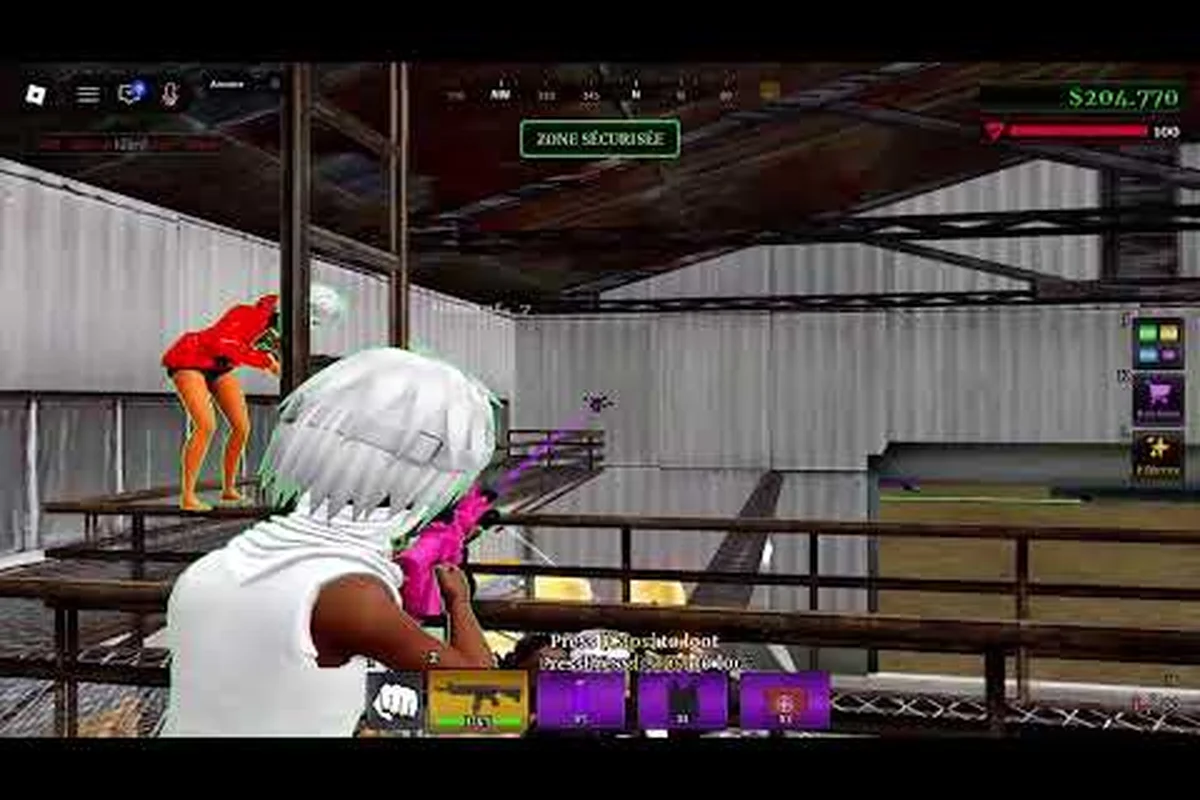
Urban Reload how many players per server determines the pace of every match, yet the clearest public information does not always present one permanent number. The lobby size, active mode, and current server population can all affect the experience, so knowing the advertised limit and the population you may encounter are equally important.
Urban Reload Player Capacity and Server Facts
Urban Reload is built around accessible PvP matches, and its server capacity affects how quickly encounters unfold. A larger lobby creates more opponents and a busier arena, while a smaller server can make positioning and eliminations easier to control. The useful question is therefore not merely whether a number appears in a guide; it is how that number changes the match you actually receive.
The supplied server information does not include an official Roblox experience configuration, an official developer statement, or a verified current server list. Consequently, a definitive technical cap would be unsupported. Community observations and player videos can demonstrate real lobbies, but they cannot prove that every mode uses the same capacity or that a temporary queue does not represent a higher platform ceiling.
What the Available Evidence Confirms
The evidence supports three useful conclusions. First, the game is presented in community videos as a Roblox PvV experience. Second, the available clips are short or focused on individual gameplay rather than a complete server-capacity demonstration. Third, player count should be evaluated per server and at a specific time, not treated as one permanent population figure.
| Evidence point | What it establishes | What it does not establish |
|---|---|---|
| Community gameplay videos | Urban Reload has active PvP matches | The exact technical server maximum |
| Short clips and showcases | Individual fights and weapon play are visible | A complete lobby with every participant |
| No supplied official configuration | A formal cap cannot be confirmed here | The game has no server limit |
| Community reports | Lobbies can vary by mode and time | A universal average player count |
This distinction matters when researching Urban Reload max players. A large number reported by one player may describe a busy event server, another mode, or a lobby that was still filling. It should be treated as a dated observation rather than a permanent rule.
Why a Universal Number Is Often Misleading
Server populations are snapshots. A lobby may contain fewer active participants during an off-peak hour, fill substantially during peak play, or route players among queues when the current round is nearly complete. The platform’s technical ceiling, the mode designer’s target population, and the actual occupied slot count are related but different figures.
A useful review should separate three layers and state which one its evidence actually supports. For Urban Reload, the technical server ceiling is a platform limit, the mode target is the population used to balance matchmaking, and the active lobby is the number of players visible in a particular match. These figures can diverge sharply: a 20-player target does not confirm that 20 slots are always occupied, while a recorded 40-player battle may reflect a busy event rather than the standard queue. Checking the game’s current server configuration or an in-match roster therefore provides stronger evidence than estimating capacity from a single gameplay clip.
| Player-count layer | Meaning | Why it matters |
|---|---|---|
| Technical server ceiling | Highest number of slots a server can hold | Establishes the theoretical maximum |
| Mode target | Population the match is designed around | Shapes pacing and spawn density |
| Active lobby | Players currently connected or eligible | Determines the immediate match density |
This distinction prevents an exaggerated conclusion about Urban Reload’s max players. For example, a 40-player active lobby in one Urban Reload match confirms only that that match was unusually dense; it does not prove that the server’s technical ceiling is 40, nor that the standard mode target is 40. Likewise, a recording with 20 connected players cannot establish that larger queues are unavailable, because off-peak matchmaking, an incomplete roster, or queue rotation can temporarily reduce the occupied slot count.
Urban Reload How Many Players per Server: What Players Observe
The clearest way to answer “Urban Reload how many players per server” is through the lobby and server interface available at runtime. Because the exact player-count label and capacity presentation can change with platform updates, users should rely on the current experience rather than an old screenshot. This method also reveals whether the number represents connected players, queued players, or a broader population counter.
A Reliable In-Game Check
Open the server browser, select an Urban Reload experience, and inspect the active server entries. Record the current population and identify the mode or queue if the interface provides that information. Repeat the check during a normal evening period and again at a different time to see how the numbers move.
| Observation | Likely interpretation | Confidence |
|---|---|---|
| One server shows a larger count | That server currently has more participants | High |
| Counts vary between servers | Population is not perfectly balanced | High |
| Counts change over several minutes | New rounds or joins are affecting occupancy | High |
| An interface states a maximum | The platform is reporting a capacity value | High for that session |
| No maximum is displayed | The limit is not exposed to users | High |
This is the strongest direct method because it observes the live product rather than relying on a remembered count. For example, if one Urban Reload server displays 32 players while another shows 28, the browser confirms the difference for that moment, even when no maximum-player figure appears. A community count can corroborate one person’s observation, but only the server browser demonstrates the current Urban Reload player count for the selected server and may also reveal how capacity differs between queues or modes.
Reading Community Observations Correctly
Player reports are useful when they include context. “There were 40 players” is incomplete without the date, mode, platform, and whether the server was full. A report tied to a specific date and observed interface is stronger because another player can reproduce the method.
The available gameplay footage provides useful context without acting as a formal capacity citation. A short Urban Reload gameplay showcase by Kooliyn reflects the game’s PvP focus, while a longer Urban Reload match by notwinningifnotwoo demonstrates how individual performance occurs within an active match. Neither video, based on the supplied metadata, documents a universal server maximum.
That means community evidence should be framed carefully: observed lobby sizes may demonstrate that substantial matches occur, but a formal maximum requires an official configuration or a clear in-client indicator. For example, a screenshot showing a populated lobby can establish that a 40-player Urban Reload match was possible on that date, but it cannot by itself prove that 40 is the server cap; players should distinguish a visible player count from matchmaking limits, queue totals, and spectator or AI slots when documenting evidence.
Urban Reload Free to Play Status and Match Scale
The answer to whether Urban Reload is free to play is straightforward: the game follows a free-to-play Roblox model, so players can enter the experience without paying for access. The broader Urban Reload free to play discussion is still relevant because monetization can affect the ecosystem indirectly through cosmetic items, progression, or server activity, depending on what the developer has implemented.
Free access makes it easier to sample different lobbies, modes, and times of day. That does not mean every server will be equally busy. Peak-hour populations are usually more useful for judging the intended match density, while quieter periods can reveal the baseline experience more clearly.
Free Access and Match Population
| Factor | Effect on server population | Practical takeaway |
|---|---|---|
| No entry purchase | Broadens the potential audience | More regions and time zones may contribute |
| Roblox account access | Allows joining through the platform | Matchmaking depends on the current queue |
| Peak-hour activity | Raises the chance of larger matches | Check during the busiest local period |
| Mode availability | Splits players across queues | A mode can feel smaller than the game overall |
| Updates and events | Can temporarily change demand | Compare counts before and after updates |
A large number of people who play Urban Reload does not guarantee a single full server. Player interest is distributed by region, mode, queue, and time. Server size is therefore best treated as an operational condition rather than a direct proxy for total game popularity.
For practical onboarding advice, the Urban Reload beginner guide can help new players understand the interface and core PvP loop before evaluating crowded arenas. Once the basic movement and combat systems are familiar, those same mechanics can be tested more effectively in a busy lobby.
How to Check the Current Urban Reload Player Count
There is no need to rely on rumors or outdated videos when the live server browser provides direct evidence. The process takes only a few minutes, but careful note-taking prevents a single busy server from becoming a mistaken claim about the entire game.
Checking Player Counts in About Five Minutes
-
Open Roblox and enter the Urban Reload experience during a period when you expect active play.
-
Open the server browser and record every visible population count.
-
Note the highest count, the lowest count, and the number of servers displayed.
-
Return later and compare the same measures to identify player movement.
-
Treat any claimed maximum as confirmed only when an official or in-client label identifies it.
| Time of observation | Typical use | Interpretation |
|---|---|---|
| Early morning | Baseline population | Often quieter, depending on region |
| Afternoon | Regional activity check | Useful for comparing peak hours |
| Evening | Peak-hour sample | Usually the best view of busy lobbies |
| Late night | Post-peak sample | Helps show how quickly traffic declines |
| After an update | Event sample | May show temporary demand changes |
The important distinction is between observed occupancy and maximum capacity. If a user is asking how many people can potentially join one server, they need a capacity source. If they want to know what a typical match feels like right now, the server list and recent match footage are more informative.
Limits of the Evidence
A complete answer requires trustworthy technical data that the supplied source set does not contain. Without an official configuration, it would be inaccurate to present a specific number as the definitive Urban Reload max players. This is especially true because third-party pages may recycle old figures after an update, and community videos can focus on a selected server rather than the whole population.
A responsible answer can still be specific about method, current observations, and the difference between the two. It can explain which figure to trust, when it was verified, and why a screenshot or community report may not represent every match.
Urban Reload Game Review: Does Server Size Improve the Match?
Server size affects pacing, visibility, and decision-making. In a crowded arena, players have more potential targets but must also watch more directions. In a small match, fights may occur sooner, yet the limited opponent pool can make one elimination feel more consequential.
The Urban Reload FFA and ranked guide is useful for examining combat priorities in different queues. For an Urban Reload game review focused on multiplayer quality, server population should be considered alongside spawn design, map size, match duration, and whether the mode rewards accurate aim or broader movement decisions.
Match Dynamics by Relative Lobby Size
| Relative lobby size | Typical experience | Main advantage | Main drawback |
|---|---|---|---|
| Small | Quicker engagements and fewer threats | Easier target tracking | Fewer opportunities for varied fights |
| Medium | Balanced pressure and movement space | More tactical options | Enemy awareness becomes harder |
| Large | Busier arenas and more opponents | Constant activity and energy | Visual clutter and crowded fights |
| Very large | Potential for chaotic encounters | High encounter volume | Spawn and survival pressure |
These categories are relative because the evidence does not establish a verified numerical maximum. A small server could still feel enormous if the arena is spacious, while a medium server could feel crowded when objectives are concentrated. The useful comparison is players per available fighting space, not the raw lobby number alone.
What Player Density Changes
Larger lobbies generally reward scanning, sound awareness, and escape routes. Players can find cover, flank opponents, or exploit temporary advantages when there are more targets. The downside is that safe corners become less dependable and a missed movement cue can produce a quick elimination.
Smaller lobbies make opponents easier to track and often produce faster rotations between encounters. However, predictability can develop, and players who understand the mode may find that repeated routes are easier to exploit. The best experience depends on whether the mode is built for quick duels or broader survival.
The Urban Reload first-hour guide can help players practice these priorities in a controlled way before entering the busiest servers. Once the core routine is stable, crowded matches become a test of awareness rather than an introduction to every mechanic.
Practical Conclusions for Urban Reload Players
The most defensible conclusion is that Urban Reload’s server population is variable, and the exact maximum cannot be confirmed from the supplied evidence. Live inspection remains the best method for answering Urban Reload how many players per server at any given moment. Current community media confirms active PvP gameplay, but it does not provide a complete lobby census or a permanent capacity statement.
Players should therefore separate three questions. “How many slots can the server hold?” requires an official technical statement. “How many people are in this lobby?” can be answered through the server browser. “How busy is the game overall?” requires observation across multiple servers and times, because one unusually popular match should not be mistaken for the typical experience.
| Player goal | Best evidence | Practical method |
|---|---|---|
| Confirm the server maximum | Official configuration or live capacity label | Look for an explicit in-client limit |
| Check current occupancy | Server browser | Record counts across all listed servers |
| Estimate normal match density | Repeated observations | Compare peak and off-peak samples |
| Assess the PvP experience | Community match footage | Review fights, spacing, and spawn pressure |
| Prepare for a busy lobby | Match-specific tactics | Prioritize awareness, routes, and cover |
Ultimately, the exact player-count figure is less useful than knowing how to verify it. Checking the live server list, noting the mode and time, and avoiding outdated figures gives players a more accurate picture of Urban Reload’s multiplayer scale.
Frequently Asked Questions
What is the Urban Reload max player count?
The supplied official and community information does not state a verified maximum server capacity, so assigning one definitive number would be misleading. Check the live server browser for an explicit capacity label, and treat community reports as observations tied to a particular date, mode, and server rather than as a permanent rule.
Does Urban Reload have free-to-play access?
Yes. Urban Reload is a free-to-play Roblox experience, meaning players can join and play without purchasing access. The free-to-play model can support a broad player base, although the number of players in one server still varies by region, time, mode, and current queue status.
Is an Urban Reload server usually full?
A server may be full during active periods, but the available evidence does not establish a typical full-lobby percentage. Population can shift as players join, finish rounds, and enter other queues. Reviewing the server list several times provides a better snapshot than assuming that every server is either full or consistently quiet.
How many players can fight in one Urban Reload match?
The exact match size depends on the mode and current server configuration, and the supplied sources do not provide a confirmed universal figure. Live lobby displays and official developer information are more reliable than old videos or unsourced claims because they can show the capacity and occupancy affecting the session you are about to enter.